Architecting a support ecosystem: Balancing intelligence & reputation
Student Success Agency is a high-stakes education platform where students are supported by a bifurcated network: a remote digital Agent and an in-person Frontline Educator (FLE). My challenge was bridging the gap between digital progress and physical reality without creating a surveillance state for the student.
Role: Senior Product Designer
Timeline: Ongoing (Multi-phase evolution, 4+ years)
Team: 2 Engineers, 2 Designers (Lean/Agile environment)
Scope: Interaction Design, Information Architecture, Permission Logic, Compliance Mapping.

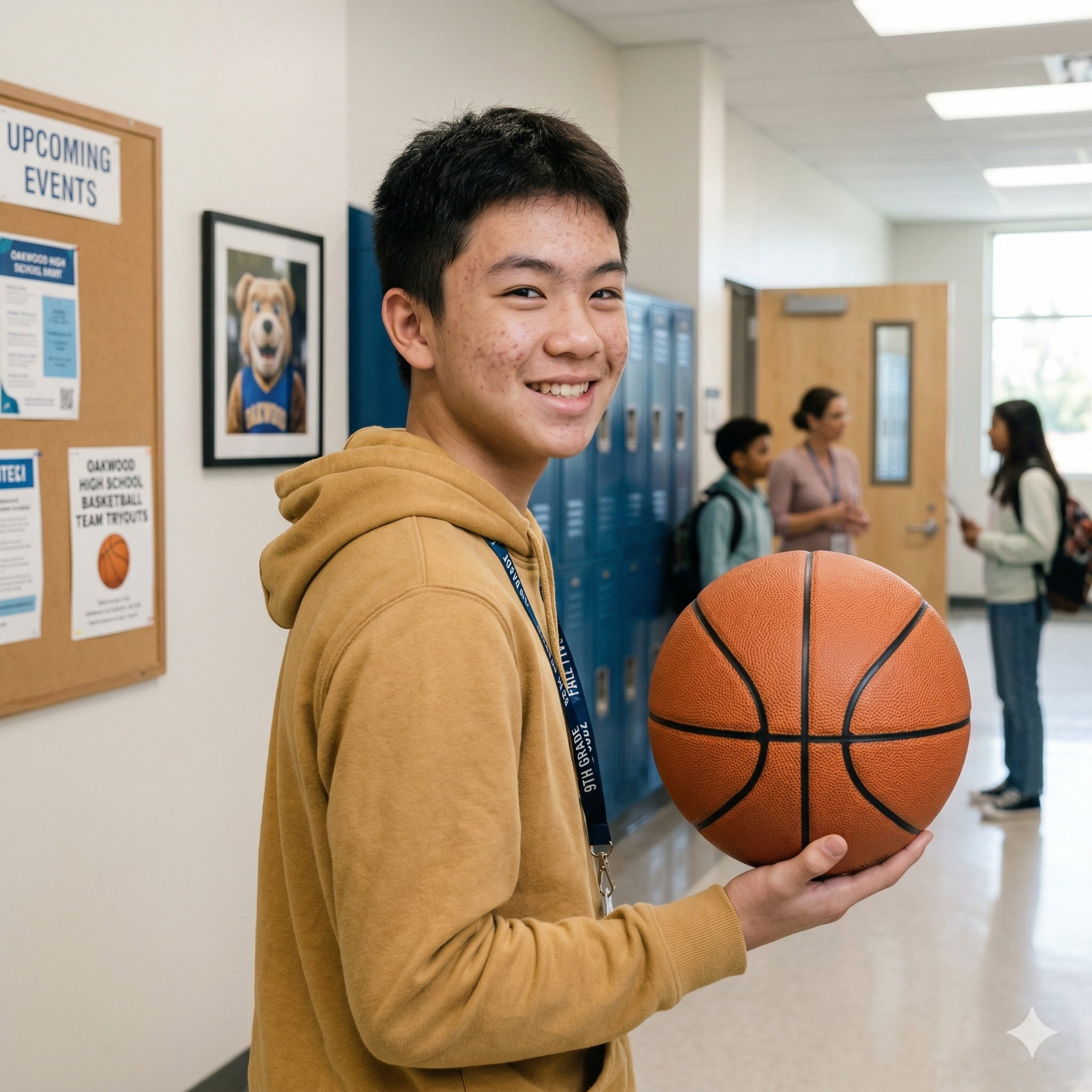

Supported personas: Students, counselors and Winbox Agents
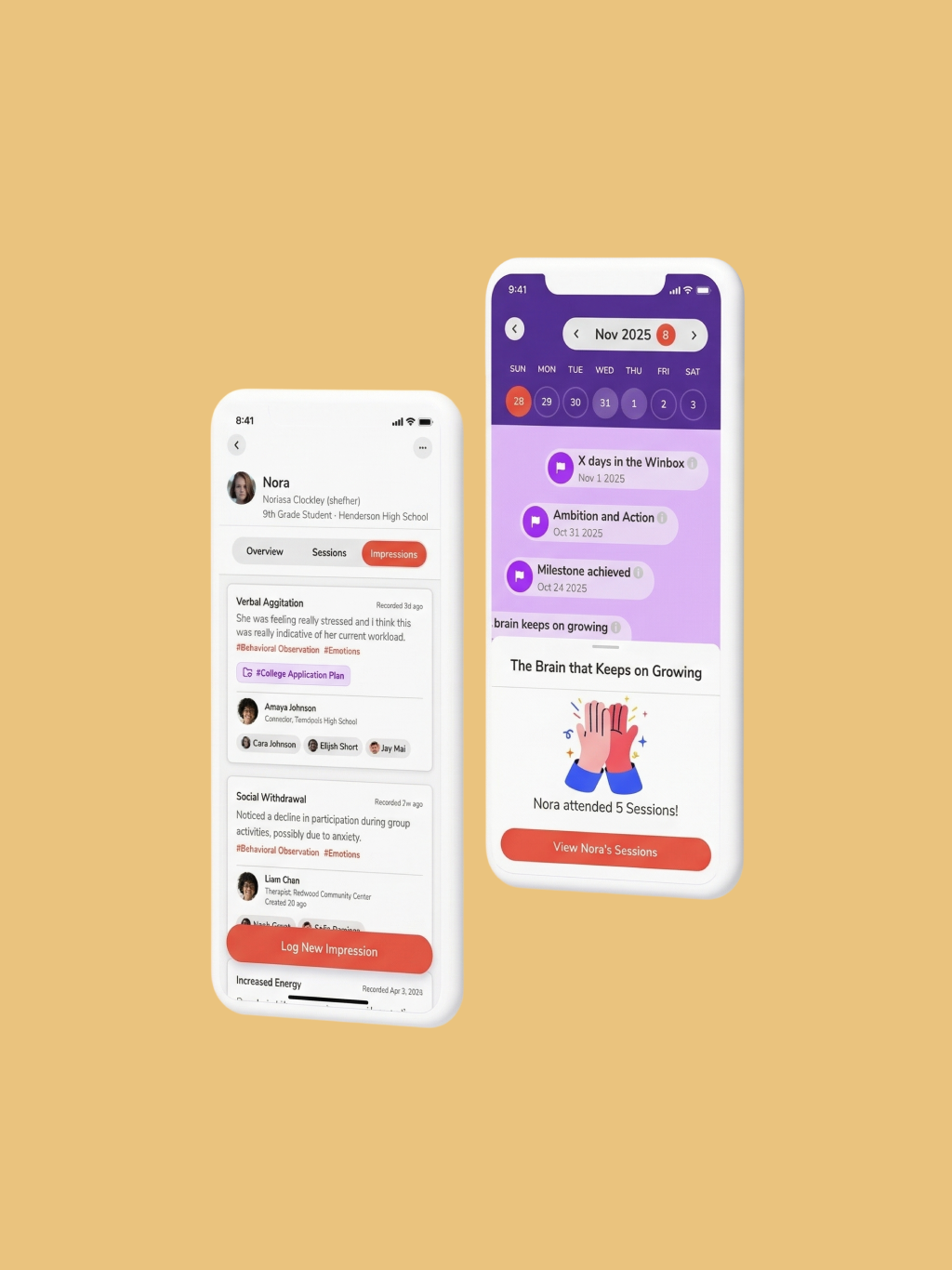
The Challenge: Designing for Two Gravities
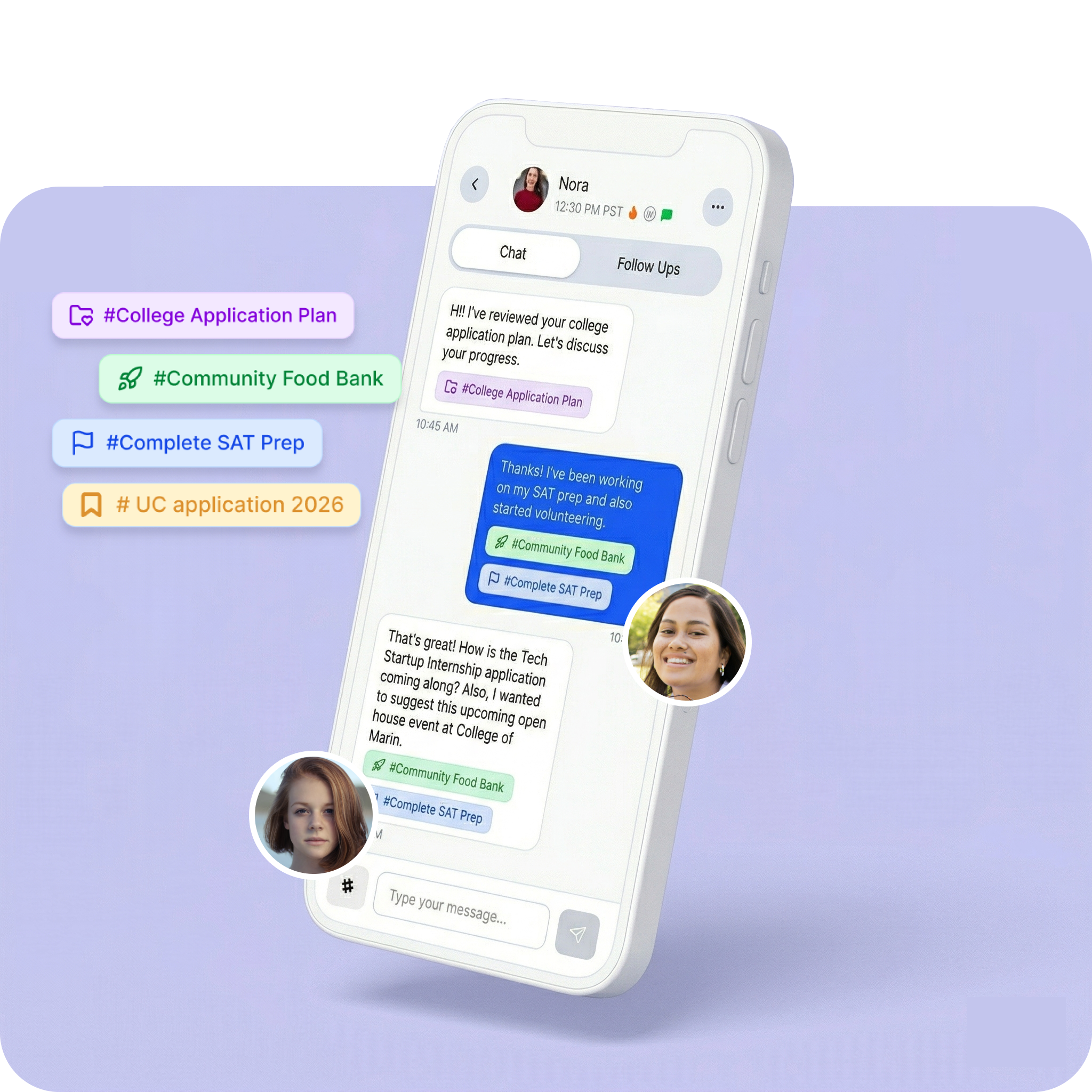
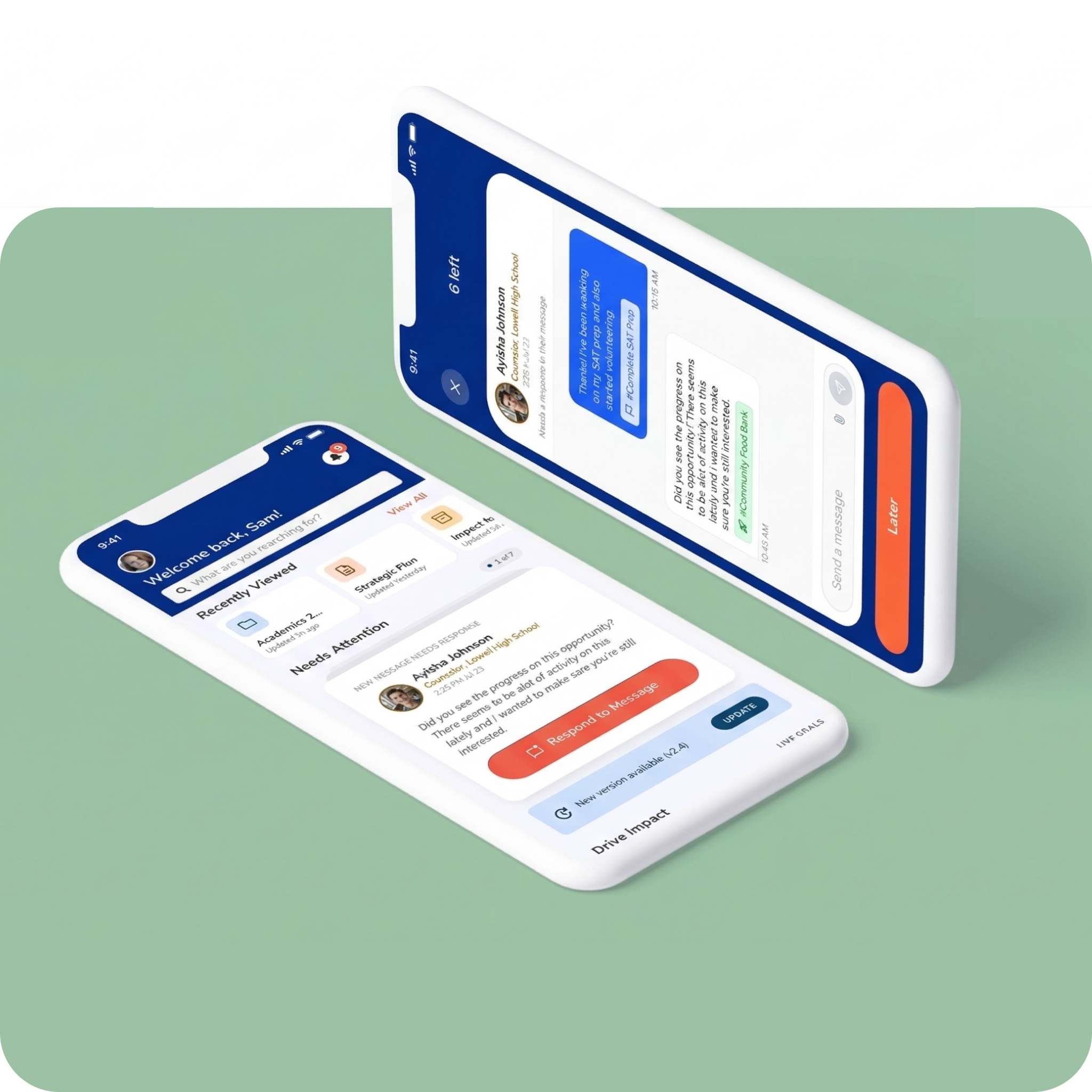
A student is often caught between two worlds: the data-driven strategy of a remote Agent and the observational reality of a physically present Frontline Educator (FLE). Previously, these adults operated in silos, leading to fragmented support and a disjointed student experience.
The objective was to build a unified workspace that enabled adult coordination without creating a surveillance state for the student.
The Constraints
We had to bridge the proximity gap between the remote Agent seeing the data and the FLE seeing the human. This meant creating a shared reality without creating a surveillance state that would break student trust. To make it work, we needed strict role distinction to ensure both adults could coordinate effectively without data fatigue or overlapping efforts.
The Systemic Solution: A Dual-Layer Architecture
We moved away from a single feed and toward a visibility model that respects the divide between physical and digital presence. I helped structure the workspace around two distinct layers: Intelligence and Reputation.
1. The Intelligence Layer (Professional Impressions)
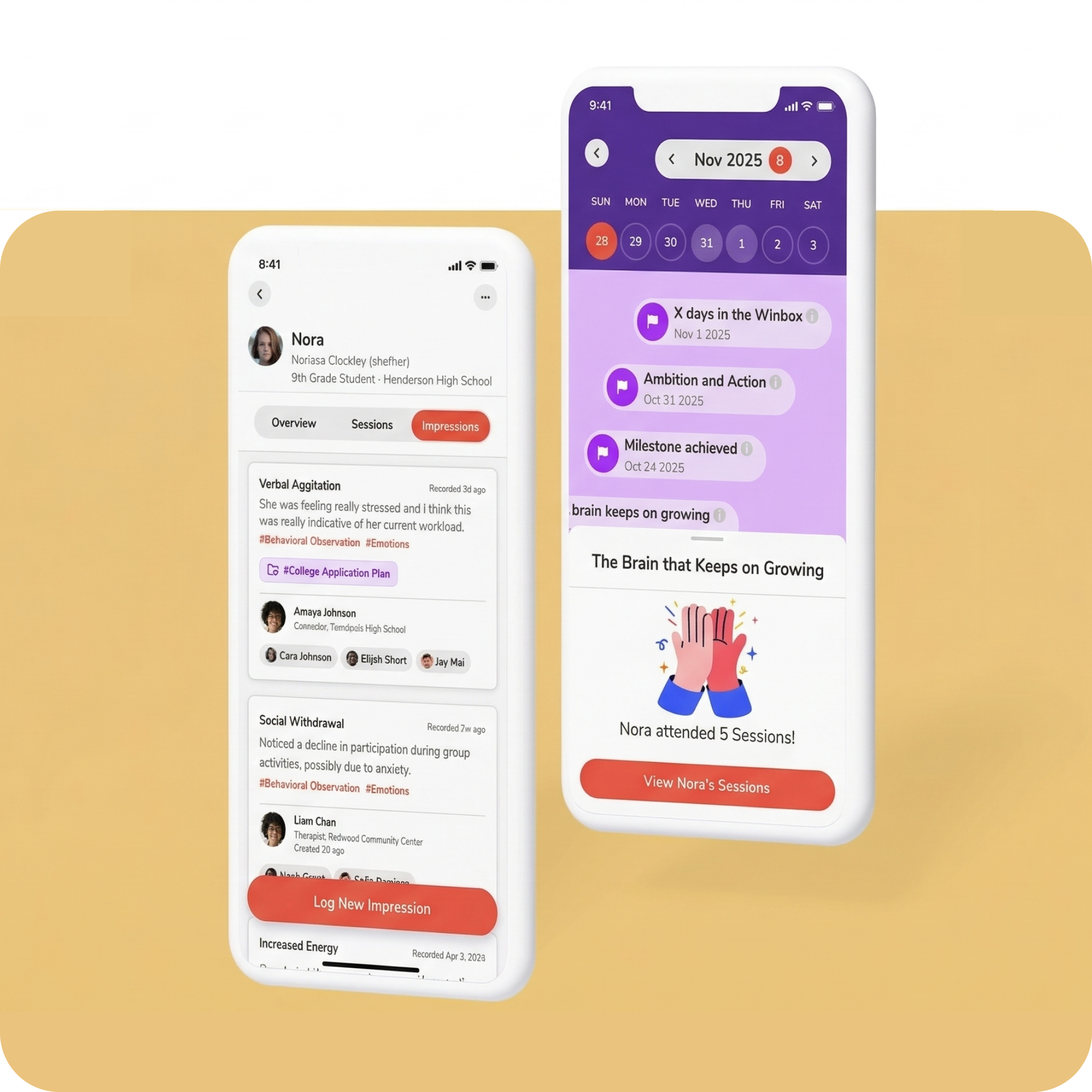
We socialized a North Star object called Impressions—private, longitudinal notes visible only to the adult support network. This created a professional cockpit for adults to share behavioral context, like specific learning disabilities or discouragement triggers. To protect student psychological safety, this data is strictly governed and never exposed to the student.
2. The Reputation Layer (Student Wins)
While Impressions serve the adults, Wins serve the student. We designed Wins as unbound trophies that act as a permanent, student-curated highlight reel. This system operates on student agency; the student acts as the final curator, deciding whether to push an achievement to the public school feed for reputation building or keep it as a private milestone.
The Result: Architectural Boundaries
The core of this design was the separation of concerns. By defining clear boundaries between private adult coordination and public student praise, we enabled proactivity without being invasive. I established a role-based visibility matrix that ensures Agents drive digital strategy while FLEs provide the observational layer, keeping the student space a safe environment for growth.
Impact
Established an Ethical North Star
By separating Intelligence from Reputation, we successfully pre-empted the risk of creating a surveillance-style environment, ensuring the platform remains a high-trust space for students.
Unified the Support Network
The Impressions model provided a common framework for two previously siloed roles, creating a standardized way for digital and physical educators to coordinate without data overlap
The Strategic Outcome
We moved from a one-to-one coaching app to a true support ecosystem. We didn’t just add more users; we designed a way for the physical and digital worlds to communicate while protecting the student’s agency. The system ensures that adults have the intelligence they need, while the student has a curated highlight reel of who they are becoming.
Validated User Agency
Early feedback from student advisors confirmed that the vetting layer in the Reputation system provided a sense of ownership over their digital identity, a core requirement for long-term platform adoption.
Scalable Governance
I delivered a role-based visibility matrix that serves as the blueprint for all future feature development, ensuring that privacy by design is baked into the product’s DNA rather than treated as an afterthought.
More Stuff