Turning a messaging app into a student operating system
Over four years, I led the design evolution of a high-stakes education platform, transforming a fragmented messaging app into a cohesive Student Operating System. I architected a relational reference system that allows users to pull system-wide objects (Opportunities, Plans, Milestones) directly into a conversation. This transition shifted the platform from a transactional chat tool to a longitudinal record of student growth and identity.
Role: Senior Product Designer
Timeline: Ongoing (Multi-phase evolution, 4+ years)
Team: 2 Engineers, 2 Designers (Lean/Agile environment)
Scope: Interaction Design, Information Architecture, Permission Logic, Compliance Mapping.


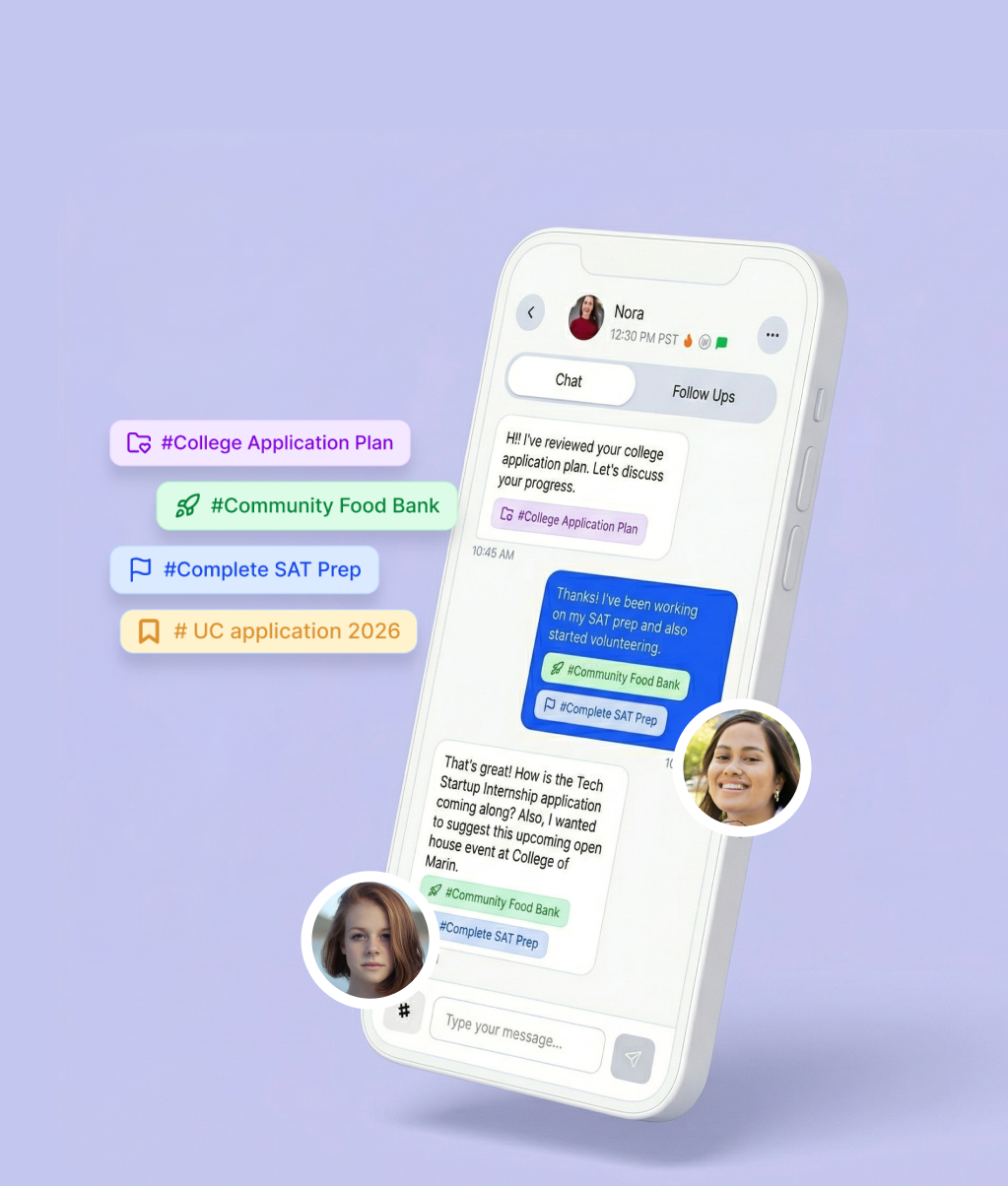
The Problem: The "Context Gap"
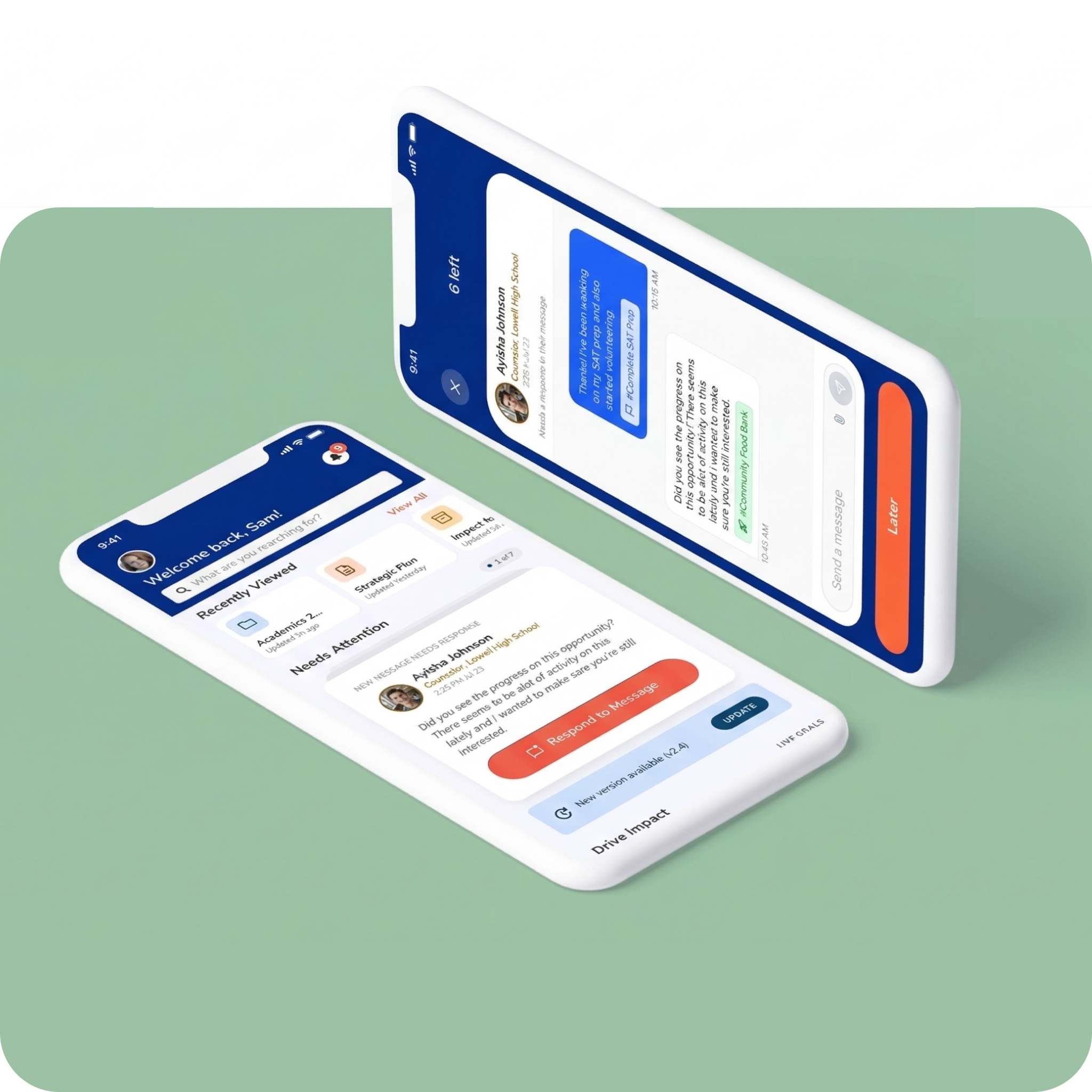
The platform was technically a chat app, but the actual value—the plans, the opportunities, and the coaching sessions—was buried in separate silos managed by different people.
The Systemic Friction: If an Agent wanted to discuss a specific college application, they had to describe it in text, hoping the student could find it in a different menu. We were essentially asking users to act as their own manual switchboard.
The Business Risk: Fragmented data led to lower task completion and a lack of "Cumulative Capital" for the student.
Constraints & Strategic Reality
Phased Rollout: Designing a comprehensive "Operating System" while shipping iterative MVPs.
Data Scoping: Managing the visibility of "Global" resources versus "Private" student-specific items within a single search interface.
Analytics Infrastructure: Working in a private environment without traditional GA4/tracking, requiring a focus on efficiency logic and qualitative signals.
The Solution: The Universal Reference Engine
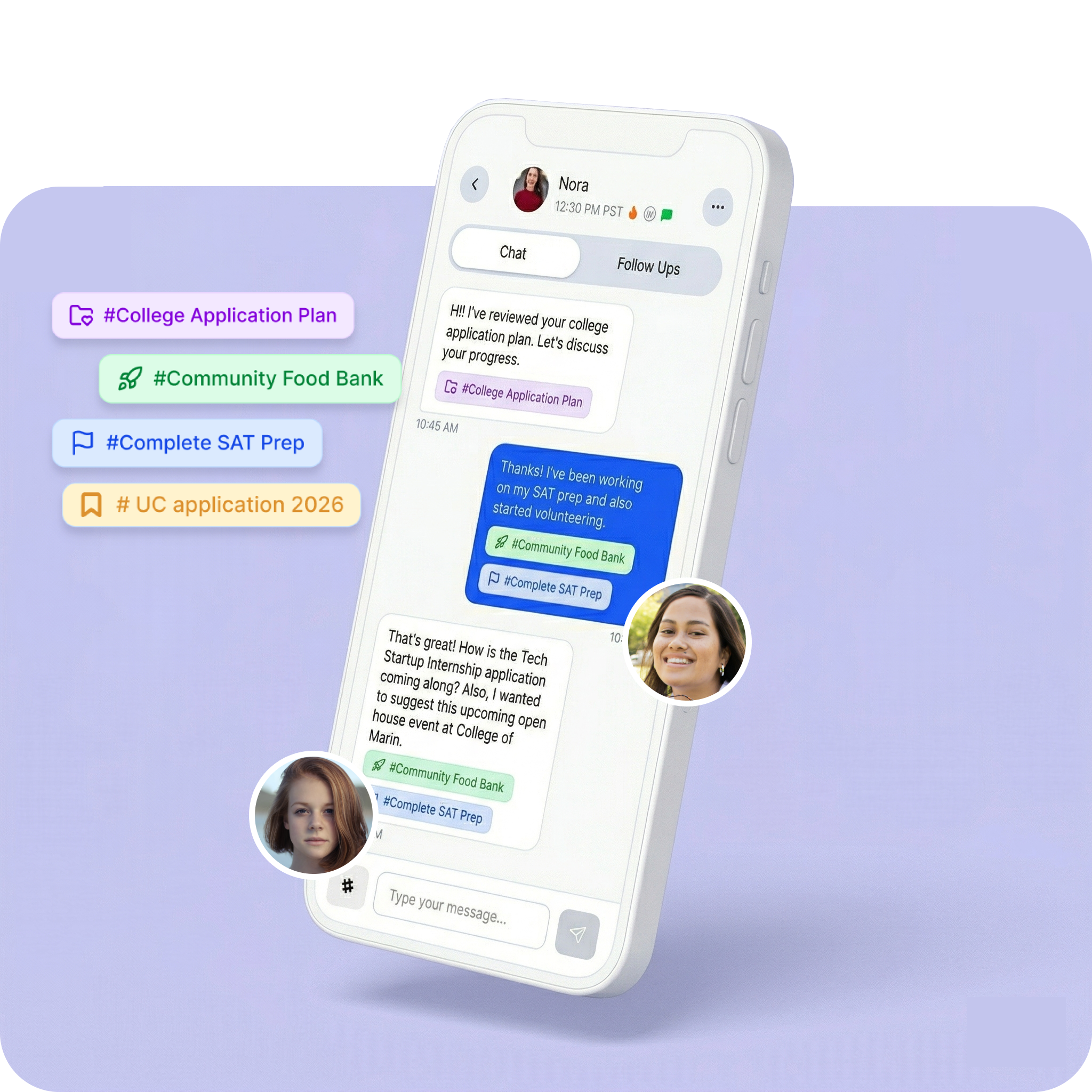
We designed a Relational Search System using a simple # trigger. This transformed the message input into a command line for the entire platform database.
1. Relevance-Based Discovery
Instead of a simple list, I architected a search algorithm that sorts results based on contextual relevance. Typing # triggers an overlay that intelligently surfaces the most pertinent objects to the current conversation.
2. Scoped Data Containers
To solve the privacy challenge, I designed separate containers within the UI overlay:
Global Objects: Opportunities and resources available to all users.
Student-Specific Objects: Private milestones and plans visible only to the authorized Agent-Student pair.
3. State-Machine Logic (In Production)
Recognizing the gap in Object Persistence, I have architected "Soft-Delete" and "Archived" states. This ensures that if a plan is deleted, the chat history remains a reliable "Paper Trail" rather than a graveyard of broken links.
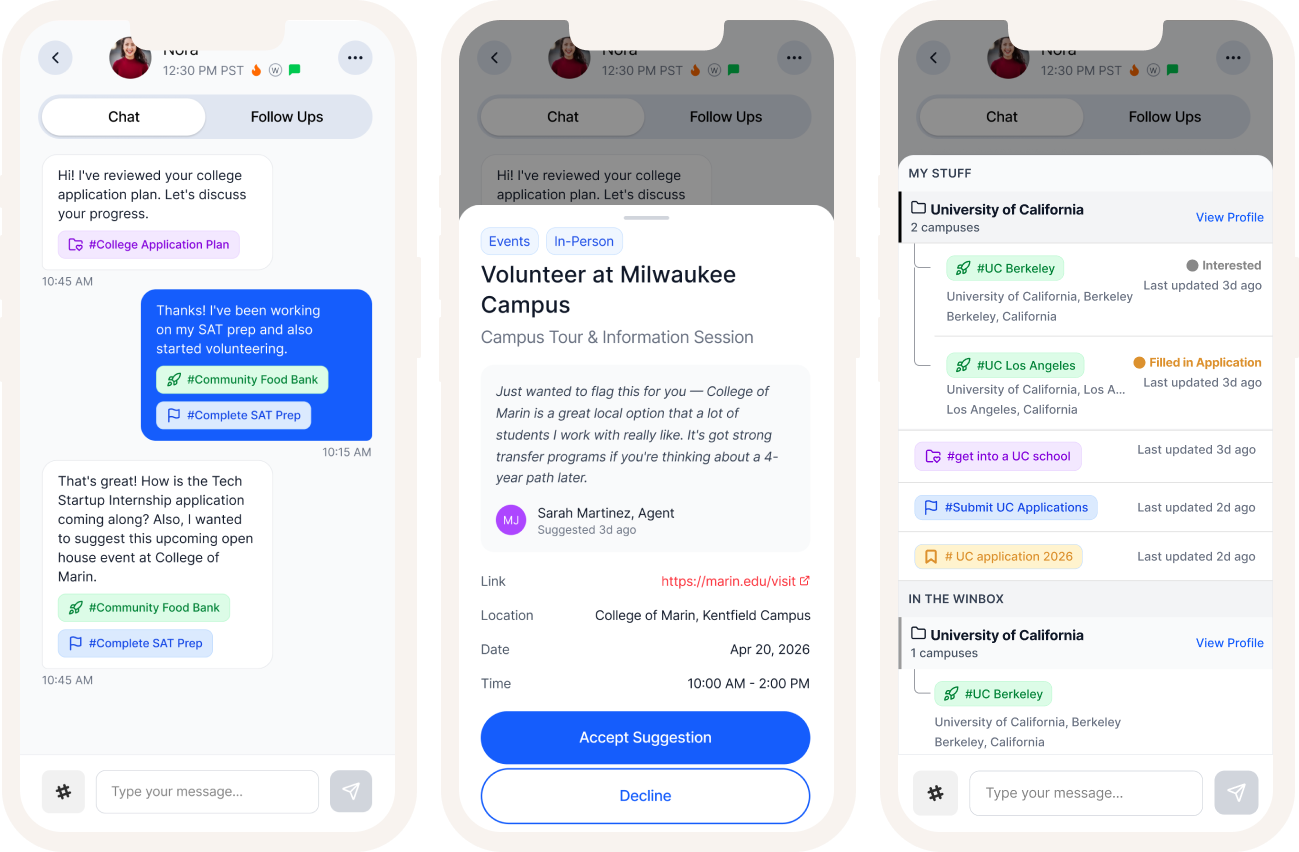
(Right) Hashtag overlay in chat between Agent and student lets both reference important objects they collaborate on
Strategic Visibility: Impressions vs. Wins
A huge part of making this workspace functional was bridging the gap between the Digital Agent (the peer coach) and the Frontline Educator (the person physically at the school). They see the student through totally different lenses but need to collaborate and share knowledge on student progress. I contributed to a tiered visibility system to manage this:
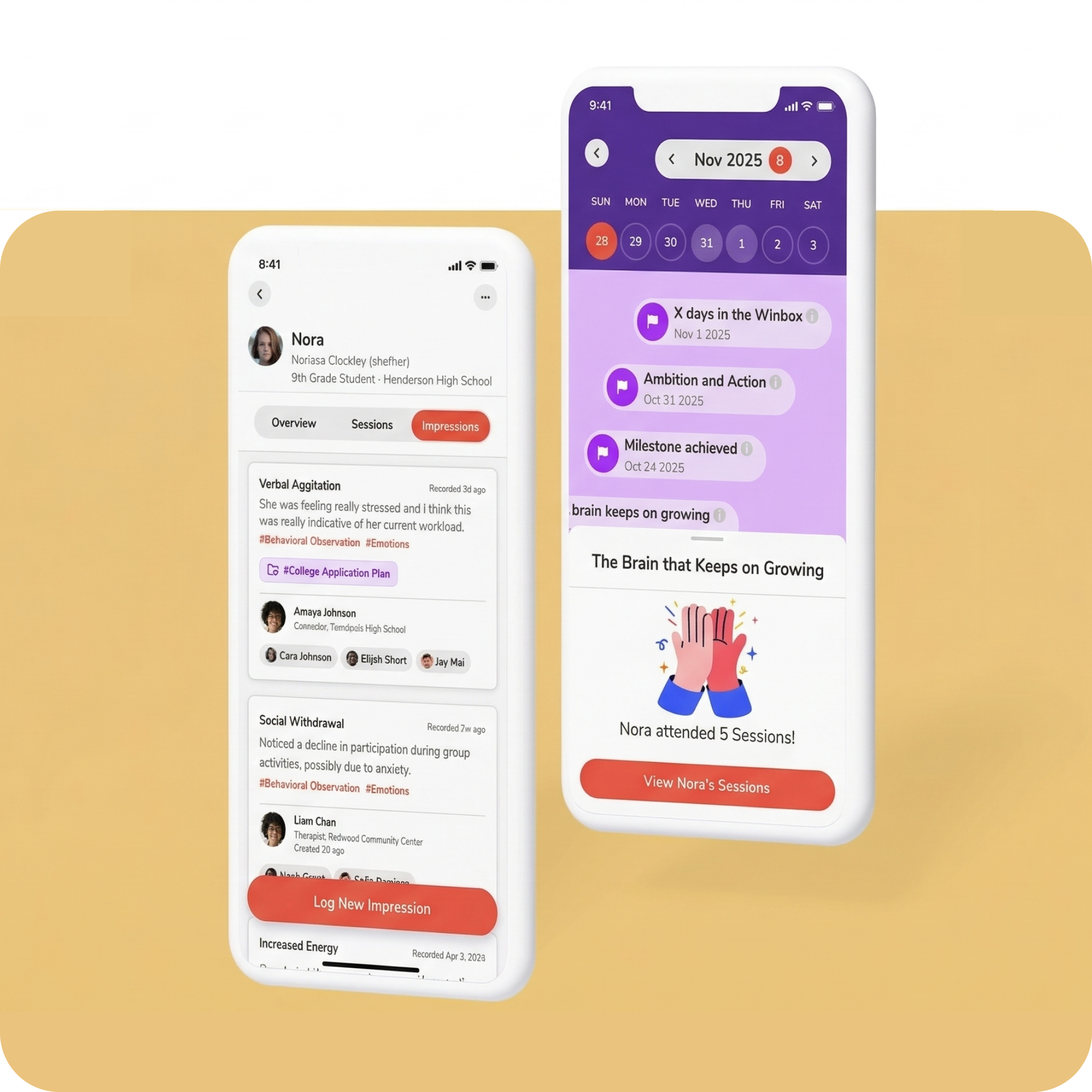
The Private Layer (Impressions): This is the longitudinal record. It’s where an FLE can note behavioral triggers or personal struggles that the student should not see but the Agent should be aware of.
The Common Ground (The Profile): This is the destination where all these referenced objects live. By linking a message to an object on the profile, we ensured that every conversation contributed to the holistic record of the student
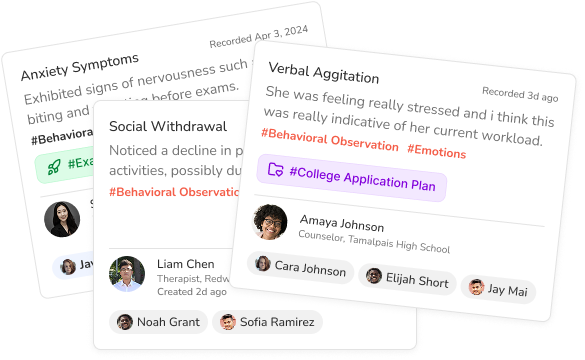
(Right) Several support team members contribute to an ongoing stream of student impressions that may inform everyone else. They aren’'t exposed to the student.
Results & Impact

Operational Health (The "Context Gap")
By centralizing the hashtag reference system, we reduced the support team's 'Time-to-Context' (the time it takes to find a student's record during a live chat) by an estimated 60% based on internal qualitative testing.
Roadmap Readiness: The Scale Metric
I architected the relational data schema to be 'object-agnostic.' This allowed the engineering team to add three new global object types (Sessions, Resources, and Milestones) in Phase 2 with zero changes to the core UI logic.
Conclusion
The system stopped being a place where you talk about work and became the place where work actually happens. By bringing system objects directly into the conversation, we cut down on navigation time and gave the support network a unified cockpit. We didn’t just build a better chat; we built a relational engine that keeps the student at the center of every interaction.
More Stuff