Rethinking how we track student growth
Most tools for students feel like a never-ending to-do list. You finish a task, it disappears, and you’re back at zero the next day. It’s a grind that eventually kills engagement because the work feels disposable.
Role: Senior Product Designer
Timeline: Ongoing (Multi-phase evolution, 4+ years)
Team: 2 Engineers, 2 Designers (Lean/Agile environment)
Scope: End-to-end UX, System Logic, Compliance Architecture

Personas affected include students, local school counselors, and Winbox Agents
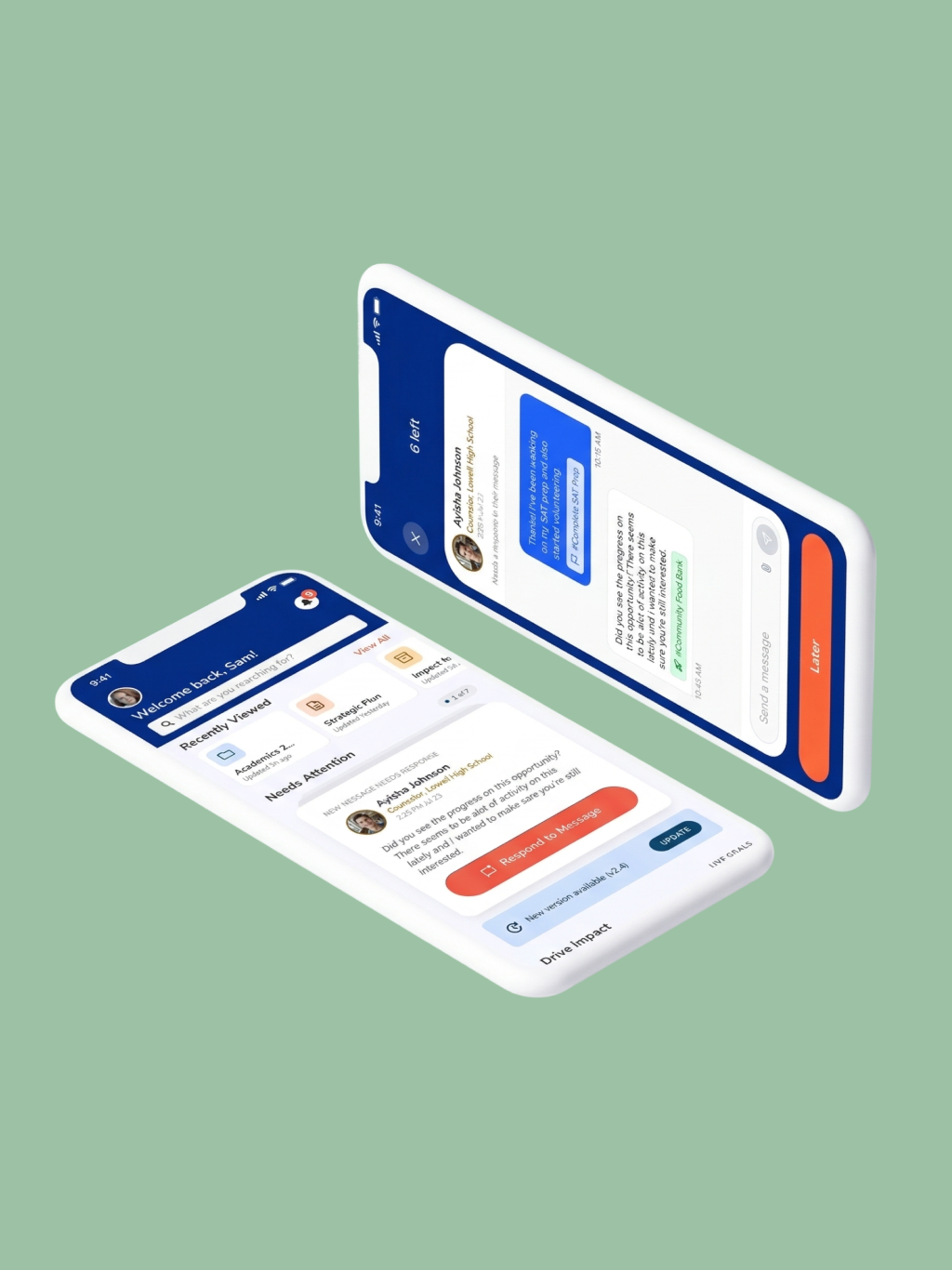
Why tracking wasn't enough
The platform was stuck in a "transactional" loop where student work felt disposable.
The Business Goal: Increase long-term retention by transforming user data into "Reputation Capital."
Strategic Constraints
Privacy & Legal: Designing around COPPA/GDPR and parental consent.
No Data Infrastructure: Needing to validate design through qualitative feedback rather than GA4 dashboards.
Architecting Identity: Building the Reputation Engine
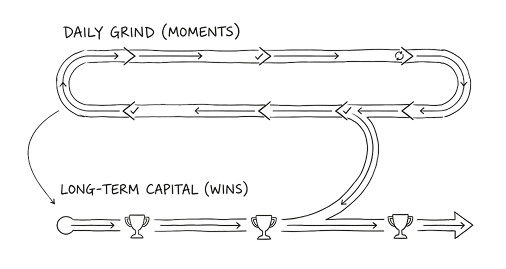
We wanted to build a system where effort actually sticks. This allowed us to break the Winbox logic into two distinct speeds:
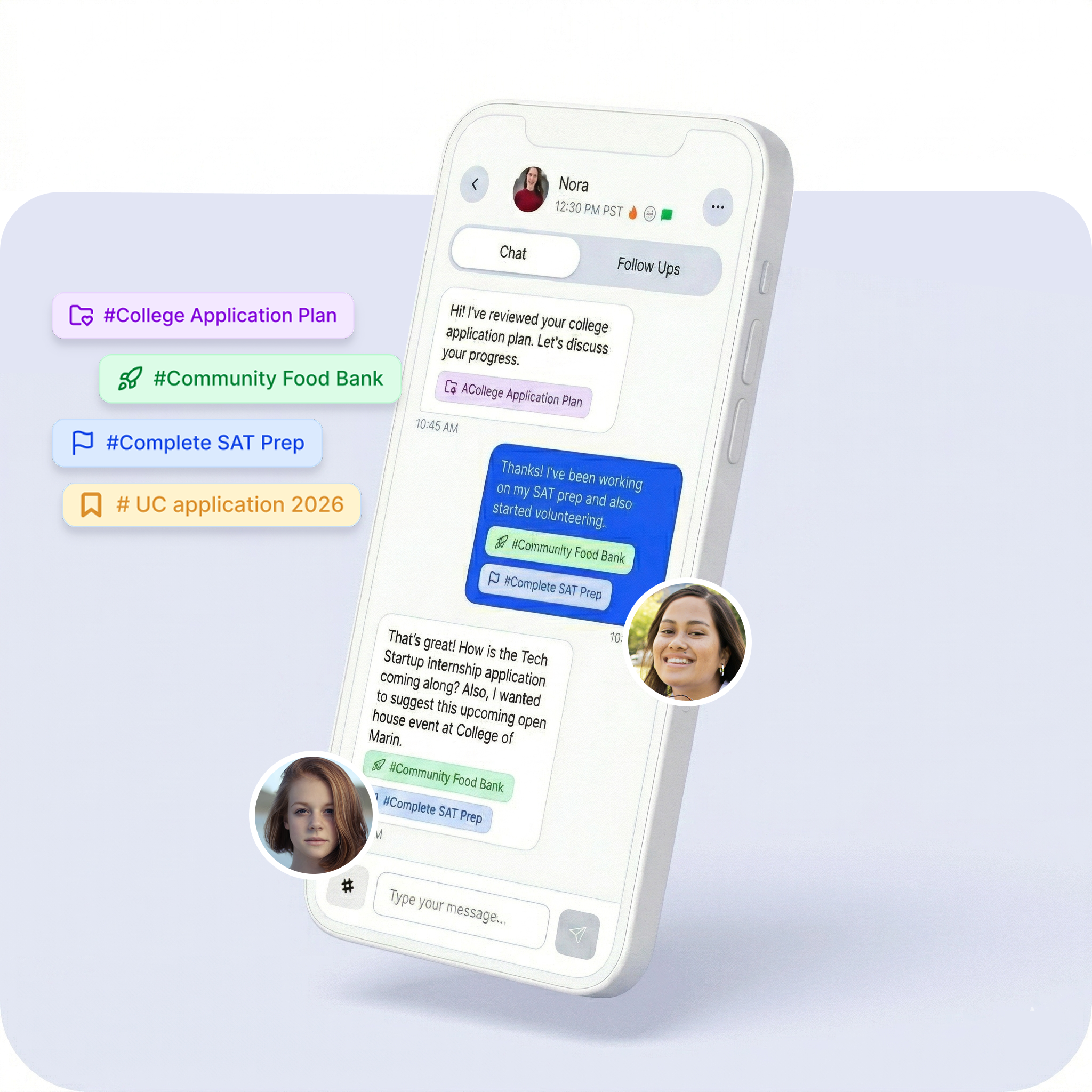
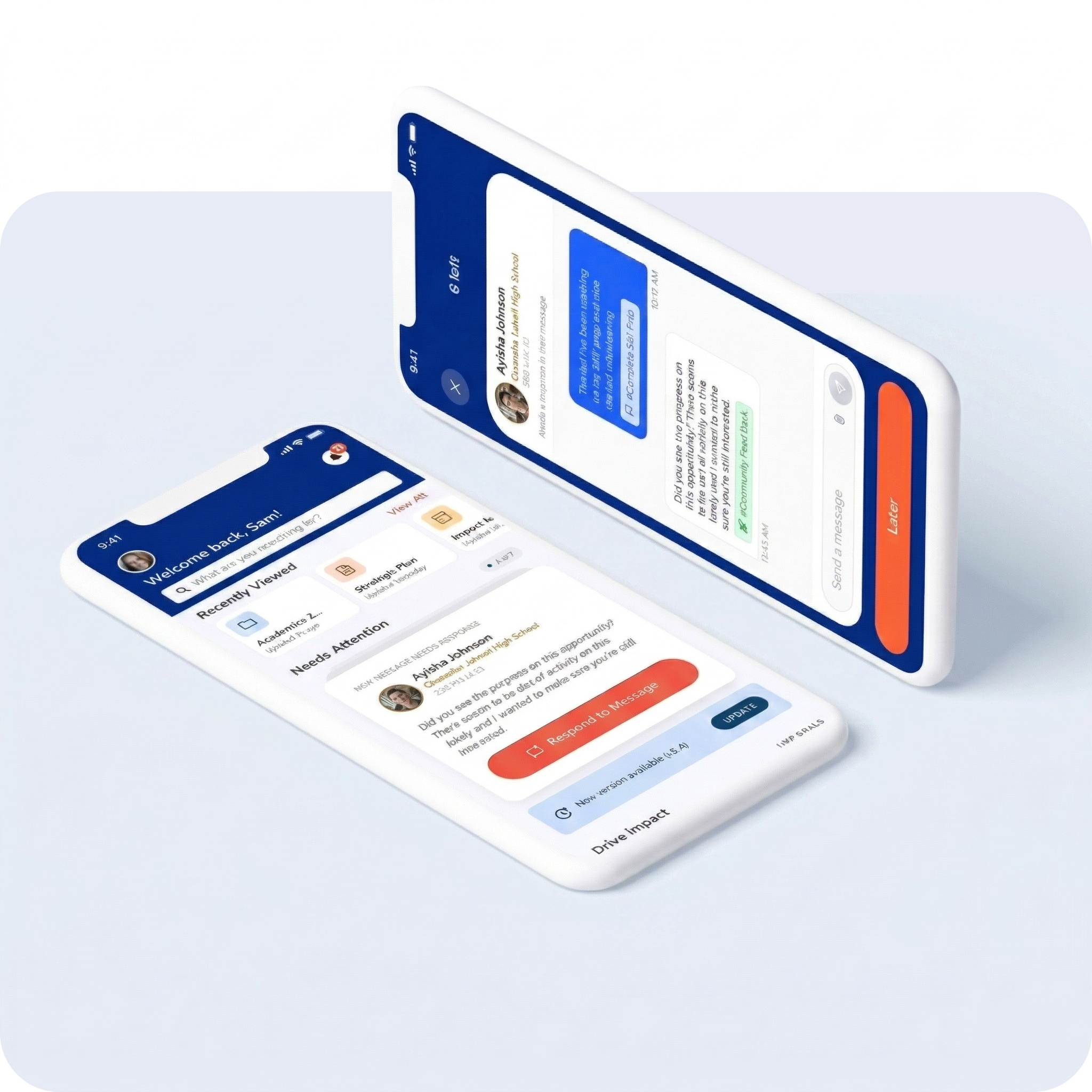
“Moments” are for the now: These are the nudges that keep the engine running. They are built with a persistence loop—if a student swipes left to skip, the moment doesn't die. It cycles back later so the priority stays front and center.
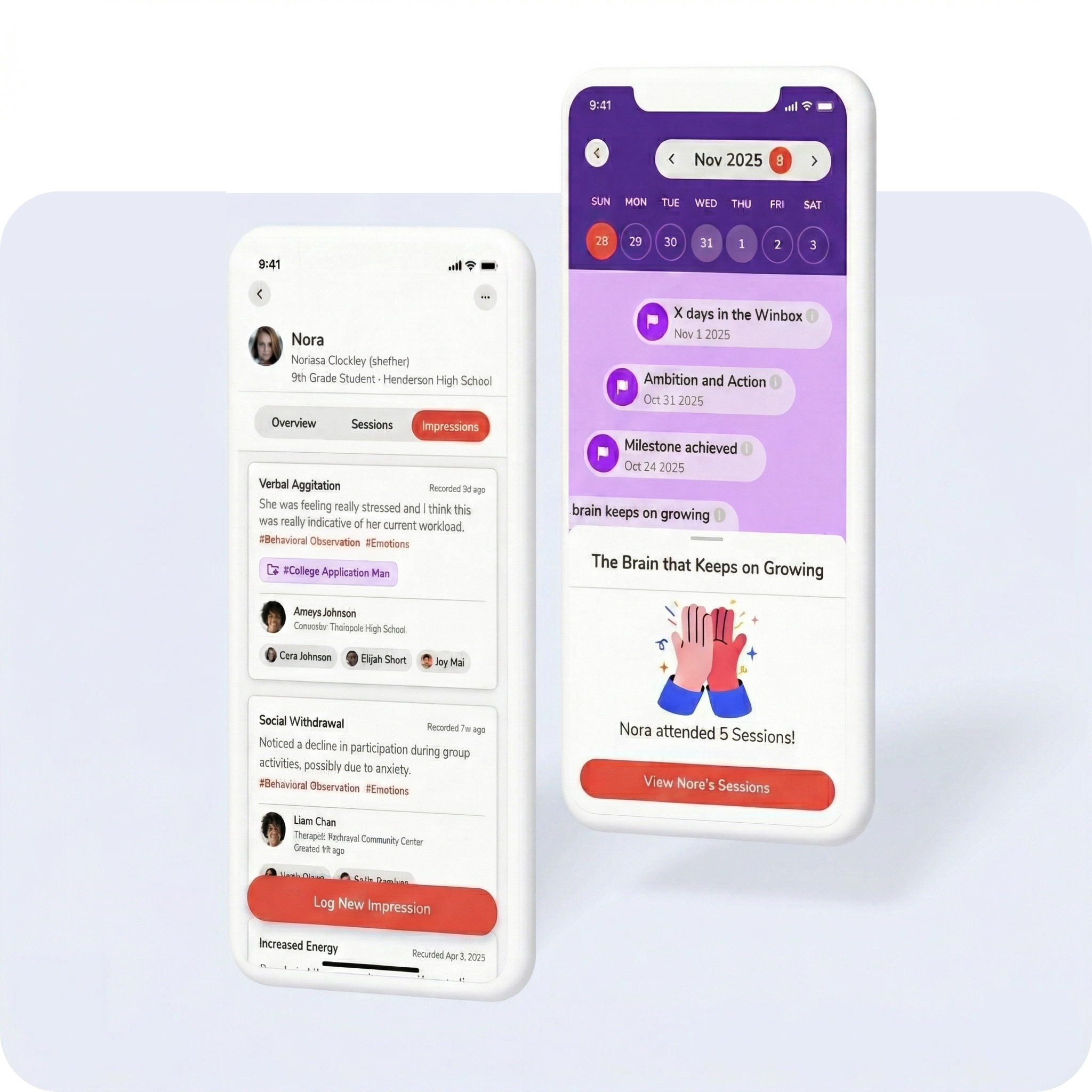
“Wins” are for the long haul: We architected Wins to be the closing bracket of the student journey. Unlike a plan step that vanishes when you check the box, a Win is an unbound trophy. It’s a permanent piece of social proof that stays on a student's profile forever.
The Result
By separating the daily grind from the permanent celebration, we turned the app into a reputation engine. It’s not just about tracking grades anymore; it’s about a student curated highlight reel that recognizes academic, social, and personal wins as equally valuable.
Deep Dive: Designing for Student Agency
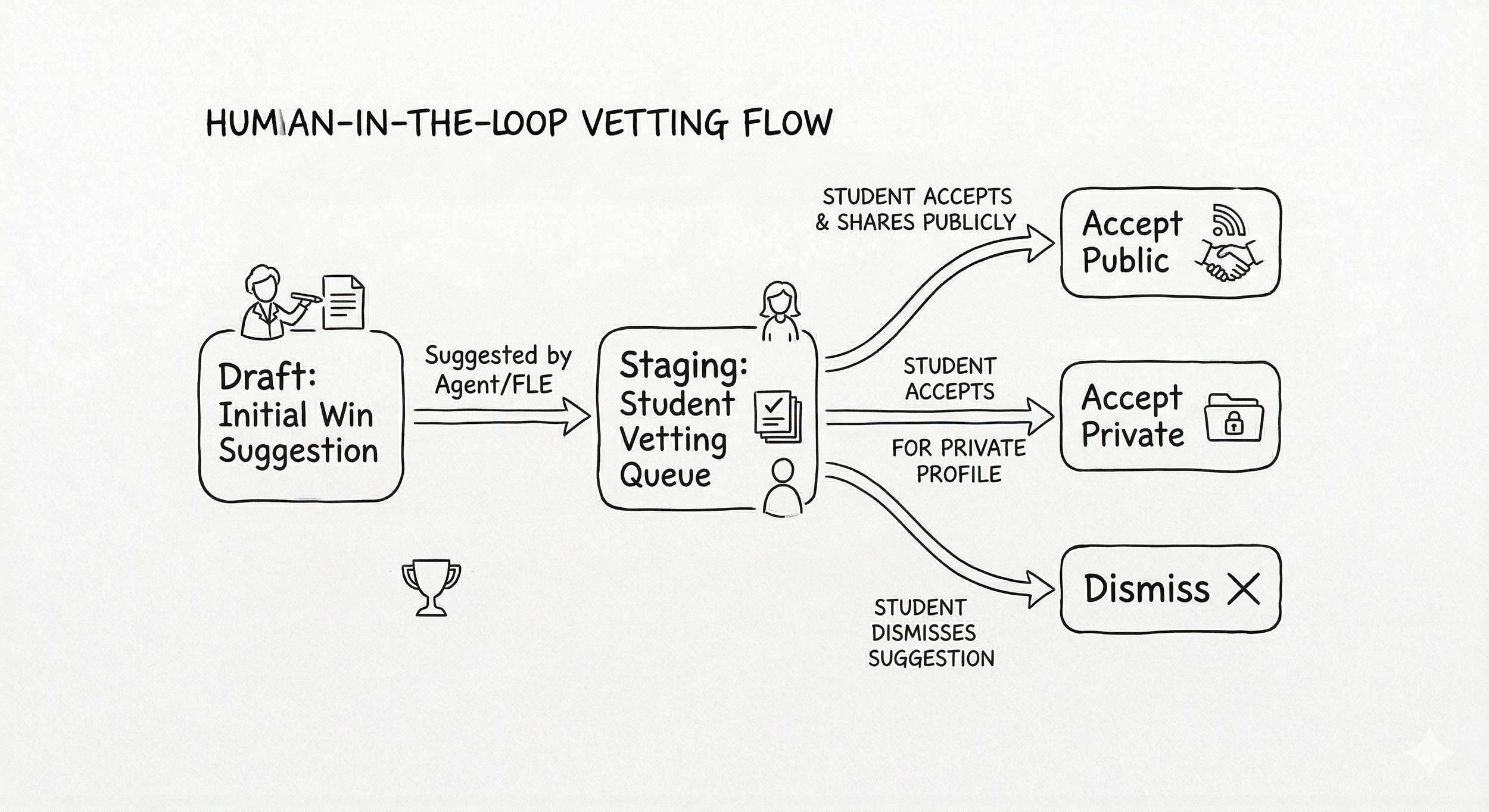
While the current system allows adults to log progress, I participated in architecting a future vetting logic to ensure students remain the owners of their own reputation. As we move toward a public school-level feed, it was critical that a Win isn't just something DONE to a student, but something they choose to claim.
In this model, a Win logged by an Agent or FLE doesn't just go live—it enters a staging state where the student acts as the curator:
Public: They can choose to push it to the school-level feed to build social proof.
Private: They can keep it on their personal profile as a private milestone.
Ignore: They can archive it if the achievement doesn't resonate with their personal brand.
Why this matters
This logic prevents the "surveillance" feel of many education tools. By designing this vetting layer into the roadmap, I ensured the Progress Engine remains a tool for student empowerment, giving them the final say in how their success is presented to the community.
Designing consent as a value-add, not a hurdle
We hit a major pivot point when school districts started requiring parental consent for student activities. The easy fix would have been to just email a DocuSign link, but that felt like a missed opportunity. It was cold, it lived outside our app, and it didn’t help the parent understand why their kid was using SSA in the first place.
The Strategy: Identity over Compliance
I approached this by building the system's first-ever Guardian Identity Model. Instead of a one-off form, I designed an orientation flow. When a parent clicks the invite, they aren't met with a wall of legal text; they’re met with a warm welcome that introduces them to the Winbox ecosystem.
I focused on three main pillars for this bridge:
The Value-First Welcome: The landing page (right) focuses on the "What" and "Who." It frames the Guardian as a partner in the student's success, making the "Get Started" button feel like a positive step rather than a chore.
Contextual "Unlocking": I designed the consent triggers to be tied directly to student momentum. If a student wants to join a new program or session, the parent sees exactly what their kid is excited about. This "Progress-based Consent" turns the parent into an enabler of growth rather than just a signature on a page.
Infrastructure for the Future: By creating a real account for the guardian during this process, we laid the groundwork for them to eventually see their student's Win feed. We weren't just solving a 2024 compliance requirement; we were building the surface area for guardians to be long-term users of the platform.
The Result
By framing consent as an orientation, we turned a high-friction legal requirement into a high-trust entry point. It solved the district's compliance needs while ensuring that the first time a parent interacted with SSA, they felt like they were witnessing their student's progress in real-time.
Strategic Evolution
Looking ahead, even though we built this specifically for human-to-human coaching, the way we structured the data actually makes it ready for future automation. By putting student agency and adult coordination first, we created a setup where tech can handle the busy work without getting in the way of the relationship.
The vetting logic we built for Wins is a perfect guardrail for automated insights. Since the system already requires the student to be the final curator of their own data, there is a built-in defense against biased or incorrect AI-generated progress. The tech might find the signal, but the student and their support team are the ones who give it meaning.
By separating daily Moments from long-term Wins, we made a two-speed engine that works well for AI synthesis. In a future version of this workspace, a language model could do the heavy lifting of summarizing weeks of Impressions for a parent or teacher. This lets the human agent focus entirely on the deep coaching and emotional support that a machine just can’t do.
The result is a system that does more than just track tasks. It is a relational tool where the humans stay in charge and the technology stays in the background as a support layer.
Conclusion
By separating the daily grind from the permanent celebration, we turned the app into a reputation engine. It’s not just about tracking grades; it’s about a student-curated highlight reel that recognizes academic, social, and personal wins as equally valuable. The Winbox became a place where students don't just "do work", they collect proof of who they are becoming.
More Stuff